If you are dealing with back pain, a pinched nerve, or the everyday wear and tear that comes from sitting, lifting, and simply living, you may have heard your chiropractor mention traction. But what is chiropractic traction and is it safe? Lake Stevens Chiropractic has provided musculoskeletal care in Lake Stevens since 1969, and we offer traction as part of our treatment options for patients across Lake Stevens, Marysville, Everett, Snohomish, and Arlington.
This guide breaks down what chiropractic traction is, how it works, what it feels like, and whether it might be the right fit for you—so you can walk into your appointment feeling informed and at ease. You can also learn more about traction therapy at Lake Stevens Chiropractic on our services page.
What Is Chiropractic Traction?
Chiropractic traction is a gentle, non-invasive therapy that uses a controlled stretching force along the spine to create space between the vertebrae. You may also hear it called vertebral traction, spinal traction, or cervical traction, depending on the area being treated. By carefully separating the spinal bones, traction is designed to help relieve pressure on the discs, nerves, and surrounding muscles so they can rest, recover, and move more freely.
Unlike a chiropractic adjustment, which uses a quick, targeted force to improve joint motion, traction applies a slower, sustained stretch. Most patients simply lie back and relax while the stretch does the work.
What Traction Is Trying to Accomplish
The goal of traction is straightforward: relieve compression. Over time, gravity, posture, repetitive movement, and injury all press down on your spine. That compression can squeeze spinal discs, irritate nerve roots, and tighten the muscles that support your back and neck. Traction may help reduce that pressure by opening up the spaces between vertebrae, which may:
- Reduce pressure on irritated discs and or pinched nerves
- Ease muscle tension and spasms
- Improve mobility, flexibility, and range of motion
- Support the movement of fluid and nutrients into the spinal discs
In short, traction creates the conditions your spine needs to feel better and function more comfortably.
How Chiropractic Traction Works
During a traction session, you typically lie on a specialized table while a gentle pulling force is applied along the length of your spine. Your chiropractor controls the amount of force, the angle, and how long the stretch lasts based on your condition and comfort.
As the spine is gently stretched, the space between the vertebrae increases. This may lower the pressure inside the spinal discs and take tension off sensitive nerve roots much like relieving the pressure on a garden hose that has been stepped on. With less compression, irritated tissues have a chance to settle down, and many patients notice reduced pain, tingling, and stiffness.
A typical session moves through a few predictable stages. First, your chiropractor reviews your exam findings and confirms that traction is still the right approach for you that day. Next, you are positioned comfortably on the traction table often lying face up with supportive cushions under your knees and neck. The stretching force is then introduced gradually and held, or cycled gently between stretch and relaxation, for about 5 to 15 minutes. Throughout the session, you stay in control; if the stretch feels too strong or uncomfortable, we adjust it immediately. Most patients find the experience calming enough that they simply close their eyes and relax. Afterward, you may feel lighter or looser, and we will talk through any stretches or movements that can help you hold onto the relief between visits.
Traction is rarely a standalone treatment. At Lake Stevens Chiropractic, we usually pair it with hands-on adjustments, targeted exercise, and stretching so you get longer-lasting results. If you would like to learn more about the tools we use during care, our chiropractor tools guide walks through each one in plain language.
Types of Chiropractic Traction
There is no single way to deliver traction. Your chiropractor will choose the approach that best matches your condition, comfort level, and treatment goals.
Manual Traction
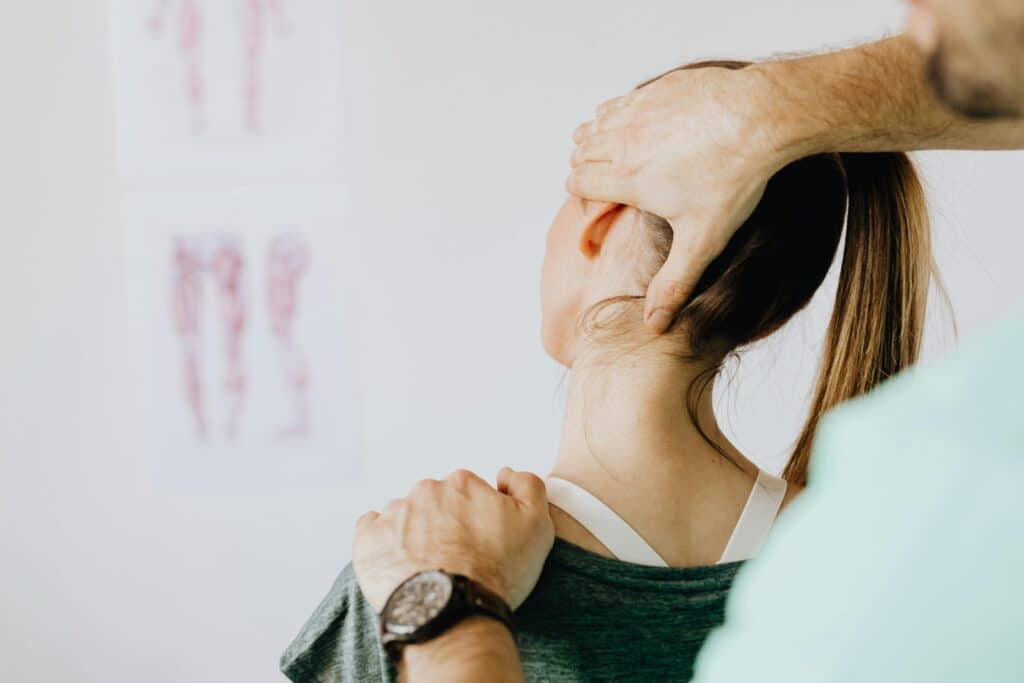
With manual traction, the chiropractor uses their hands to apply a controlled stretch to your spine or neck. Because the force is applied by hand, it can be adjusted moment to moment based on how your body responds. This method is highly customizable and is often a good starting point for patients who are new to traction.
Cervical Traction
Cervical traction focuses specifically on the neck. A gentle upward stretch creates space between the cervical vertebrae, which can relieve pressure on the nerves that travel into your shoulders, arms, and hands. Cervical traction is commonly used for neck pain, stiffness, headaches, and symptoms related to a pinched nerve in the neck.
Mechanical / Motorized Traction
Mechanical traction uses a specialized table or device to deliver a steady, controlled pulling force. Some systems are computerized, which allows your chiropractor to set precise levels of force and gently cycle between stretching and relaxation. This approach is often used for the lower back and is well suited to conditions like herniated discs and sciatica, where consistent, repeatable decompression is helpful. Mechanical traction is closely related to spinal decompression therapy, which uses controlled decompression to help reduce pressure on the spine; the two terms are sometimes used together, though decompression typically refers to a specific motorized form of traction.
Conditions Chiropractic Traction May Help
Traction is not a cure-all, but it can be a valuable part of a care plan for a range of spine and nerve-related conditions.
Herniated and Bulging Discs
When a spinal disc bulges or herniates, it can press on nearby nerves and cause sharp, radiating pain. Traction may help reduce the pressure inside the disc and create space for the nerve to breathe. For a deeper look at non-surgical options, see our guide to herniated disc treatment in Lake Stevens.
Sciatica and Pinched Nerves
Sciatica and other pinched nerve conditions often cause pain, numbness, or tingling that travels down the leg or arm. By opening up the spaces where nerves exit the spine, traction can help relieve that irritation. Learn more in our overview of pinched nerve treatment.
Degenerative Disc Disease and General Neck/Lower-Back Pain
Over time, spinal discs lose some of their height and cushioning. Traction gently stretches the spine, which may ease stiffness and improve comfort for patients dealing with degenerative disc disease as well as everyday neck and lower-back pain.
Muscle Tension, Stiffness, and Limited Range of Motion
Tight, overworked muscles often accompany spinal problems. The sustained stretch of traction can help these muscles relax, which may improve your range of motion and make movement feel less restricted—whether your tension comes from long hours at a desk, physical work, or sports injuries.

Benefits of Chiropractic Traction
When traction is part of a thoughtful care plan, many patients notice meaningful improvements, including:
- Reduced pressure on discs and nerves – Relief from compression is the core benefit of traction and the reason most patients try it.
- Less muscle tension and spasm – Gentle stretching helps tight muscles release.
- Improved mobility and flexibility – Less pressure often means easier, more comfortable movement.
- A drug-free, non-surgical option – Traction can be part of a drug-free, non-surgical care plan that supports the body’s natural healing process without medication or the risks of surgery.
- Complementary to adjustments – Traction may be used before or after adjustments to reduce tension and support more comfortable care.
Results vary from person to person. Some patients feel relief within a few sessions, while others need a more consistent plan over several weeks. That is why individualized care matters so much. Two people with similar symptoms may respond very differently to traction depending on the underlying cause, their activity level, and their history. Before recommending traction, we look at the whole picture—your exam, imaging when needed, and your day-to-day habits—so the plan fits you rather than a generic template. What we can promise is that your care will be tailored to your examination findings, your history, and your goals.
Traction vs. Chiropractic Adjustments — How They Differ
It is easy to confuse traction with a chiropractic adjustment, but they do different jobs:
- Adjustments use a quick, controlled force to restore joint motion and alignment. They are about getting a stuck joint moving again.
- Traction uses a slower, sustained stretch to decompress the spine, create space between vertebrae, and relieve pressure on discs and nerves.
Rather than competing, the two often work together. Your chiropractor may use traction to loosen and decompress the spine, then follow with an adjustment to improve joint function. This combination may help reduce tension and support more comfortable care than either technique alone. If you are comparing options, our guide to the pros and cons of spinal decompression is a helpful companion read.
Getting Started at Lake Stevens Chiropractic
If you think traction might be right for you, the first step is an exam. During your visit, our team will review your history, listen to your concerns, and assess your condition through hands-on examination and imaging when needed. From there, we will explain whether traction is a safe and appropriate part of your care plan—and if it is not the best fit, we will walk you through other non-surgical options that may serve you better. Traction is not the right choice for everyone. Patients with osteoporosis, recent fractures, bone cancer, or other severe bone conditions may be advised to pursue a different approach, and that decision always starts with a proper evaluation.
Lake Stevens Chiropractic has provided musculoskeletal care in Lake Stevens since 1969. Our team led by Dr. Peter Hanson, Dr. Mike Ilyankoff, and Dr. Yunjo Song bring over 60 years of combined experience to every patient we see. Our office is located at 905 WA-9, Lake Stevens, WA 98258, and we proudly serve patients from Lake Stevens, Marysville, Everett, Snohomish, Arlington, and the surrounding communities.
Take the first step toward pain-free living. Schedule a free consultation with Lake Stevens Chiropractic, or call us at (425) 334-5066 to talk through your concerns with our team.
Frequently Asked Questions
What is chiropractic traction used for?
Chiropractic traction is used to relieve pressure on the spine by gently stretching it and creating space between the vertebrae. It may help with herniated and bulging discs, sciatica and pinched nerves, degenerative disc disease, neck and lower-back pain, and muscle tension. For a full list of common questions, browse our chiropractic FAQs.
Does chiropractic traction hurt?
For most patients, traction is not painful. You will typically feel a gentle stretch or a mild pulling sensation while you relax on the table. Some people notice slight soreness or stiffness after the first few sessions, similar to how you might feel after starting a new exercise, but this usually fades quickly. Your chiropractor will adjust the force to your comfort, so let us know right away if anything feels off.
Is chiropractic traction safe?
Chiropractic traction is generally safe when it is professionally supervised and based on a proper exam and diagnosis. However, it is not the right fit for everyone. Patients with osteoporosis, spinal fractures, bone cancer, or other severe bone and nerve conditions may be advised to avoid traction. The safest way to find out whether traction is appropriate for you is to schedule a consultation so our team can evaluate your condition first.